
For systems that underproduce
Solar Production Troubleshooting in Gilbert, AZ
Measuring what the system makes, comparing it to what it should, and tracing the gap to its cause.
- Free estimate with a written diagnosis of what is wrong and what it takes to fix
- Itemized pricing for parts, labor, roof work and any permit or utility paperwork
- We work on existing systems, including ones whose original installer is gone
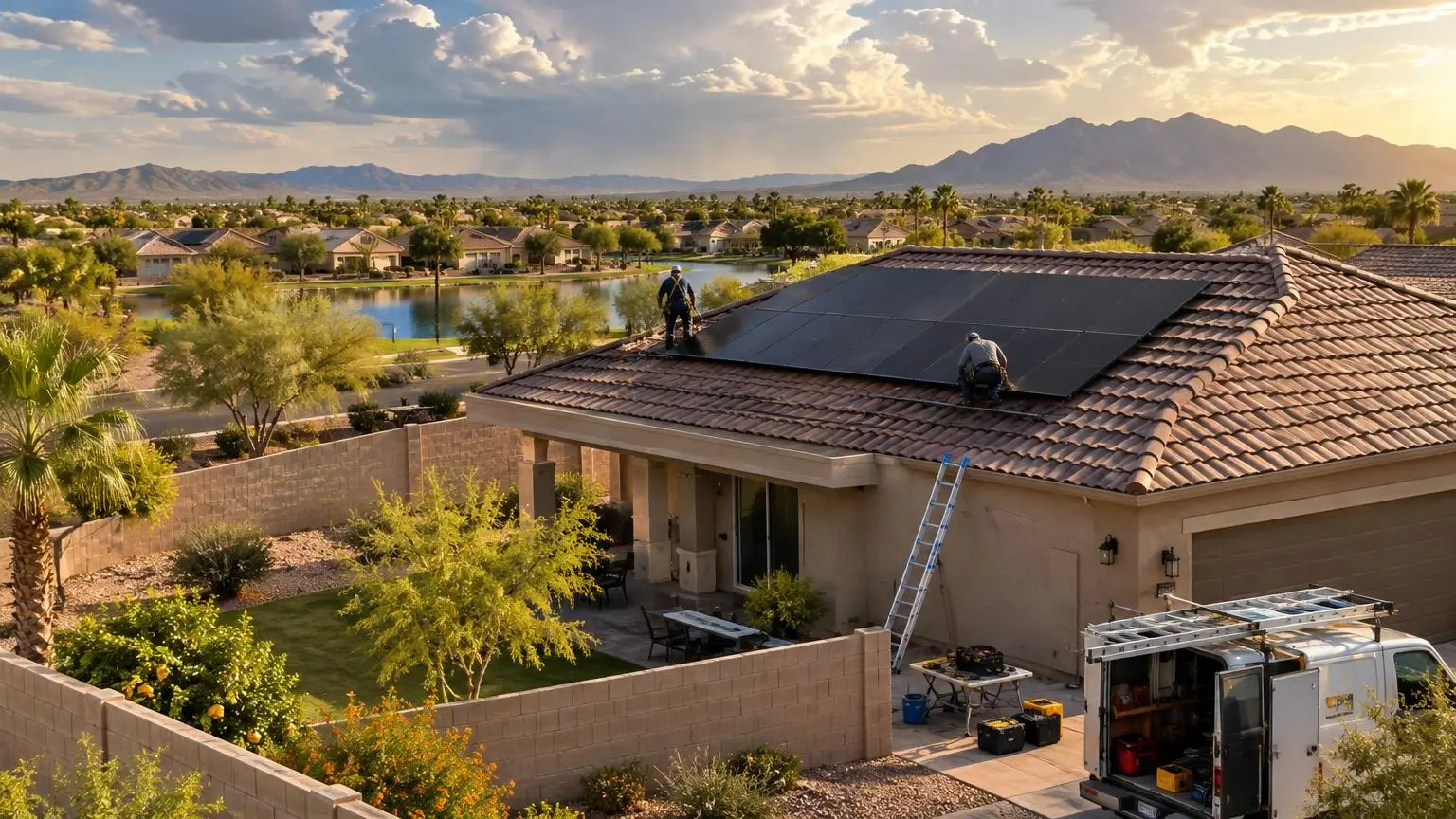
Your Bill Went Up and the Sun Did Not Change
Solar Production Troubleshooting starts with a simple question: how much should this system be making, and how much is it actually making? In Gilbert, plenty of homeowners never get a clear answer to either. The installer is gone, the monitoring app stopped working, and the only clue is an electric bill that is higher than it used to be. We work through the problem in order, from the easy checks to the hard ones, and give you a written explanation of what we found.
Start with the right comparison
Solar output changes a lot through the year, so comparing July to March tells you little. We compare the same months across years, look at sunny days rather than cloudy ones, and account for the fact that panels lose a small amount of output each year as they age and produce somewhat less when they run hot. A system that made noticeably less this June than last June, under similar weather, has a problem worth finding.
Common causes we find
- A tripped breaker or open disconnect after a storm, a power outage or someone working on the electrical panel
- A failed microinverter or optimizer, which takes one panel offline without affecting the rest
- A dead string on a string inverter system, from a failed connector, a damaged cable or a blown fuse
- Inverter derating from heat, when an inverter in direct sun throttles itself on summer afternoons
- Soiling from monsoon dust or bird droppings, which matters more on low-tilt arrays that do not rinse well in rain
- New shade from a tree, a neighbor's addition or a satellite dish that was not there when the system was designed
- Monitoring errors that only make the system look broken: a new router, a failed gateway, or a data plan that expired
Gilbert's climate adds a few twists
With average highs of 104 to 106 degrees from June through August, the inverter and connectors work hardest just when the system has the most to give. SolarEdge's derating note says most of its residential models run at full power only up to about 120 degrees ambient, and lists direct sun and poor clearance as causes of overheating. Monsoon season, which the National Weather Service counts from June 15 to September 30, adds dust storms, wind that can loosen wiring clips, and lightning that can damage electronics. A drop in production right after a big storm narrows the list of suspects.
How we test
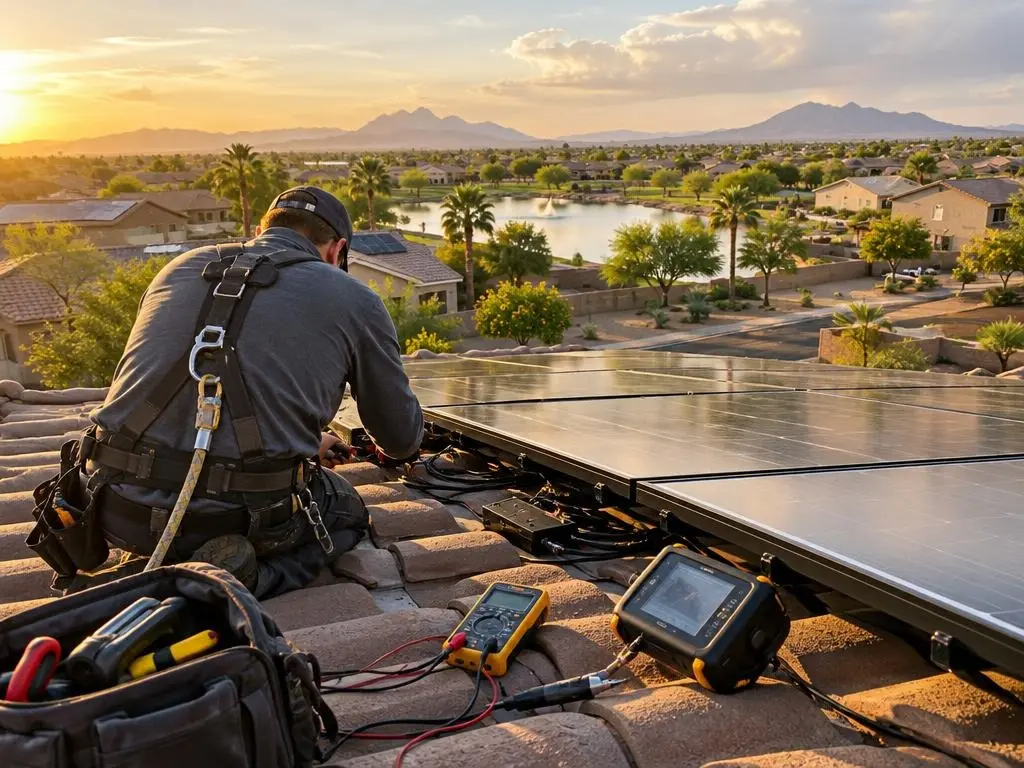
We read the inverter's own history and error log, then measure. On a string system, each string's voltage and current is checked against what the panel count and conditions should give. On microinverter and optimizer systems, panel-level data usually points straight at the problem units, and we confirm on the roof. We look under the array for chewed or sagging wiring and connectors that show signs of heat, check the AC side back to the main panel, and look for shade and soiling. If the system is a decade old and the panels themselves are suspect, we can test individual modules.
Utility plans and how they hide problems
Your bill alone can make troubleshooting harder. SRP's solar price plans include demand charges on some plans and export credits on others, so a higher bill can come from a change in how you use power in on-peak hours rather than from a failing system. SRP's Customer Generation page, for example, lists on-peak hours of 5 to 9 a.m. and 5 to 9 p.m. in winter and 2 to 8 p.m. in summer, and says that plan will be discontinued as of the November 2029 billing cycle. Measuring production directly separates an equipment problem from a billing one.
What you get
At the end of a troubleshooting visit you have a written summary: what the system is producing, what it should produce, what is causing the difference, and what it would cost to fix. If the system is working correctly and the bill is the issue, we tell you that too.
What a Troubleshooting Visit Covers
Not every step is needed on every system. The written report shows which ones we ran.
Production review
Inverter history, app data and utility bills compared across the same months in different years.
String and module testing
Voltage and current measured per string, and per panel where needed, against expected values.
Microinverter and optimizer check
Panel-level reports reviewed and non-reporting units confirmed on the roof.
Wiring and connector inspection
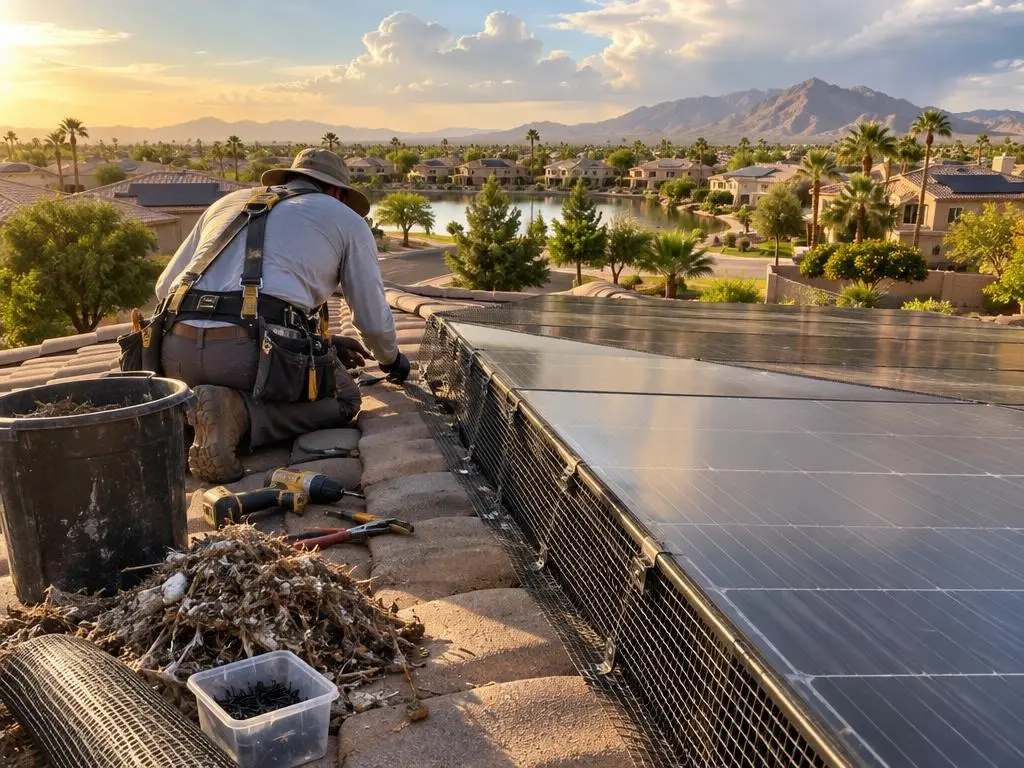
Under-array cable, connectors and junction boxes checked for heat marks, damage and loose fittings.
Shade and soiling assessment
New shade sources and dirt or droppings on the glass noted with their likely effect.
Monitoring restoration
Reconnecting Wi-Fi or gateways so you can see production again.
Typical Diagnostic and Repair Costs
| Job | Typical range |
|---|---|
| Solar inspection when not covered by a contract (HomeGuide) | $150 to $350 |
| Average solar repair (HomeGuide) | $250 to $1,500 |
| Loose or chewed wiring (HomeGuide) | $100 to $400 |
| Cracked or broken panel glass (HomeGuide) | $20 to $450 |
| Minimum service call (HomeGuide) | $100 to $250 |
Ranges vary with system size and type, roof access, how many components have failed and whether parts are under manufacturer warranty. Your written estimate is the price.
How Troubleshooting Works
1. Gather what you have
Bills, app screenshots, the inverter model and when you noticed the change all help us arrive prepared.
2. Measure on site
We read the inverter, test strings or panel-level units, and inspect wiring, shade and soiling.
3. Explain the gap
You get a written summary of expected versus actual output and the cause of the difference.
4. Quote the fix
Each repair is priced separately so you can decide what to do now and what can wait.
Solar Production Troubleshooting Questions
How do I know if my solar is underperforming?
Compare production for the same month in different years, on sunny days. A drop of more than a few percent from one year to the next, under similar weather, is worth checking.
My app says zero but the inverter shows a green light. What does that mean?
Often the system is fine and the monitoring connection is broken, from a router change or a failed gateway. The inverter display or your utility meter can confirm.
Do panels lose power over time?
Yes, slowly. All panels lose a small amount of output each year. A sudden drop is not aging; it is usually a failed component, a wiring fault or shade.
Could my high bill be my price plan, not my panels?
It can. On plans with demand charges or low export credits, when you use power matters a lot. Measuring production directly tells us which it is.
Can you troubleshoot a system with no monitoring?
Yes. We test at the inverter and on the roof, and can often add or restore monitoring so you can track it afterward.
Solar Production Troubleshooting Service Areas
- Solar Panel Repair in Gilbert, AZ
- Solar Panel Repair in Agritopia, AZ
- Solar Panel Repair in Val Vista Lakes, AZ
- Solar Panel Repair in Power Ranch, AZ
- Solar Panel Repair in Seville, AZ
- Solar Panel Repair in Higley, AZ
- Solar Panel Repair in Lyons Gate, AZ
- Solar Panel Repair in Spectrum, AZ
- Solar Panel Repair in Cooley Station, AZ
- Solar Panel Repair in Queen Creek, AZ
- Solar Panel Repair in San Tan Valley, AZ
- Solar Panel Repair in Johnson Ranch, AZ
- Solar Panel Repair in San Tan Heights, AZ
- Solar Panel Repair in Florence, AZ
- Solar Panel Repair in Anthem at Merrill Ranch, AZ
- Solar Panel Repair in Coolidge, AZ
- Solar Panel Repair in Gilbert Heritage District, AZ
Get a Solar Production Troubleshooting Estimate
Tell us how much your bill changed and when, and we will book a free visit to measure what your system is really doing.