
String inverters, microinverters and optimizers
Inverter Repair & Replacement in Gilbert, AZ
Fault codes read, failed units found, and replacements placed where Gilbert summers will not cook them.
- Free estimate with a written diagnosis of what is wrong and what it takes to fix
- Itemized pricing for parts, labor, roof work and any permit or utility paperwork
- We work on existing systems, including ones whose original installer is gone
The Part That Usually Fails First
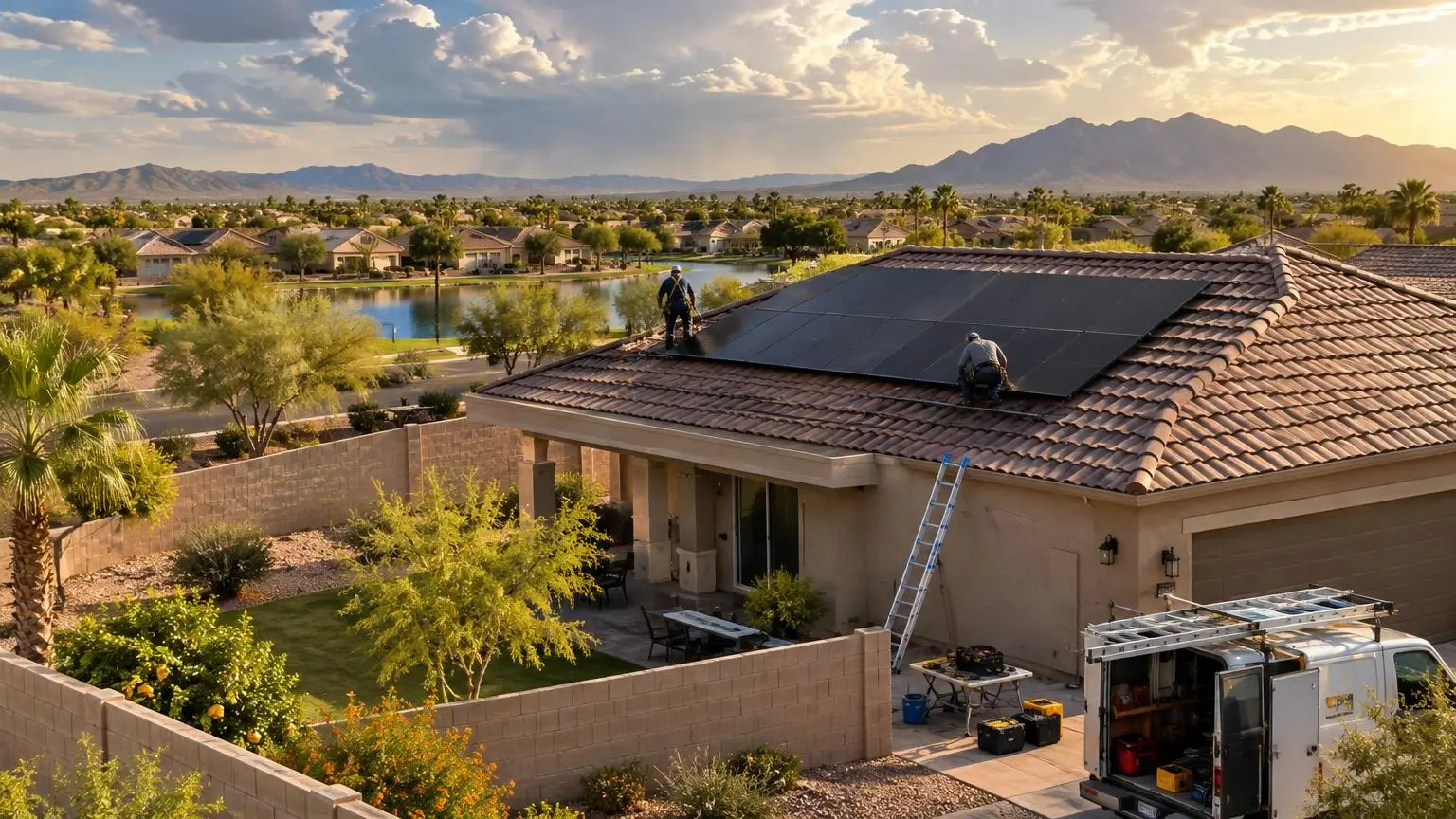
Inverter Repair & Replacement is a common solar repair in Gilbert, because the inverter is the hardest-working electronic part in the system. It turns the direct current from the panels into the alternating current your house and the grid use, and it does that all day in some of the hottest weather in the country. Panels can keep working for decades; inverters, by HomeGuide's estimate, last 10 to 15 years for string models and 15 to 25 years for microinverters. If your system went in around 2012 to 2016, it is in the window where inverter trouble is common.
Know which kind you have
The U.S. Department of Energy describes the main types simply. A string inverter is one box, usually on a garage or side wall, that takes power from a whole string of panels. It costs less, but a problem anywhere in the string drags down the whole string. Microinverters sit under each panel and convert power right there, so one bad unit only takes out one panel. Some systems use a string inverter with a power optimizer under each panel, which adds panel-level control and monitoring. The repair approach is different for each, and so is the cost.
Signs the inverter is the problem
- A red, orange or blinking status light, or an error code on the screen
- The display is blank during daylight hours
- Production in the app drops to zero on sunny days, or one panel or string reads zero while the rest work
- The unit clicks on and off repeatedly or shuts down on hot afternoons and comes back in the evening
- A buzzing or burning smell near the inverter (turn the system off at its disconnect and call)
Heat and inverter placement
SolarEdge's derating note says most of its residential inverters deliver full power up to about 120 degrees ambient, with a few models rated higher, and it names direct sunlight and poor clearance as causes of overheating. In Gilbert, where average highs pass 100 degrees from June through August, an inverter on a west-facing wall with no shade can throttle its own output every summer afternoon. When we replace a string inverter, we look at whether moving it or adding a simple shade cover would help it run cooler. Microinverters live under the panels, where they are shaded but still hot, which is one reason a few units on an older array fail before the rest.
Repair or replace?
Some inverter faults are not the inverter at all. A tripped AC breaker, a loose terminal, a ground fault in a damaged roof wire or a failed communication card can all show up as an inverter error. We test those first. When the inverter itself has failed, replacement is usually the practical answer, since internal board repair on residential units is limited. If it is still under the manufacturer's warranty, the manufacturer may supply the replacement unit under its own claim rules; we document the failure and help you put the claim together.
Replacing a string inverter
A new inverter has to match the array's voltage and current, and may not be the same brand as the old one. Upgrading to a different inverter can also change what the utility has on file. SRP, for example, asks that changes to an approved system go through a change request in its PowerClerk portal with updated documents. We confirm what your utility and the Town of Gilbert need before ordering the unit.
Replacing failed microinverters
On a microinverter system, the monitoring app often shows exactly which panels are dark. Replacing those units means removing the panel above each one, swapping the micro, and reconnecting the trunk cable. If the original model is discontinued, a newer compatible unit or a gateway update may be needed. On tile roofs, we plan the path carefully so pulling a panel does not crack the tile around it.
Monitoring that stopped reporting
A silent app does not always mean a dead system. Wi-Fi changes, a new router or a failed gateway can cut off reporting while the panels keep producing. Checking the inverter display or the utility meter tells us which it is, and reconnecting monitoring is a short, low-cost fix.
What Inverter Work Includes
Each estimate lists which of these steps your system needs and what each costs.
Fault and error code diagnosis
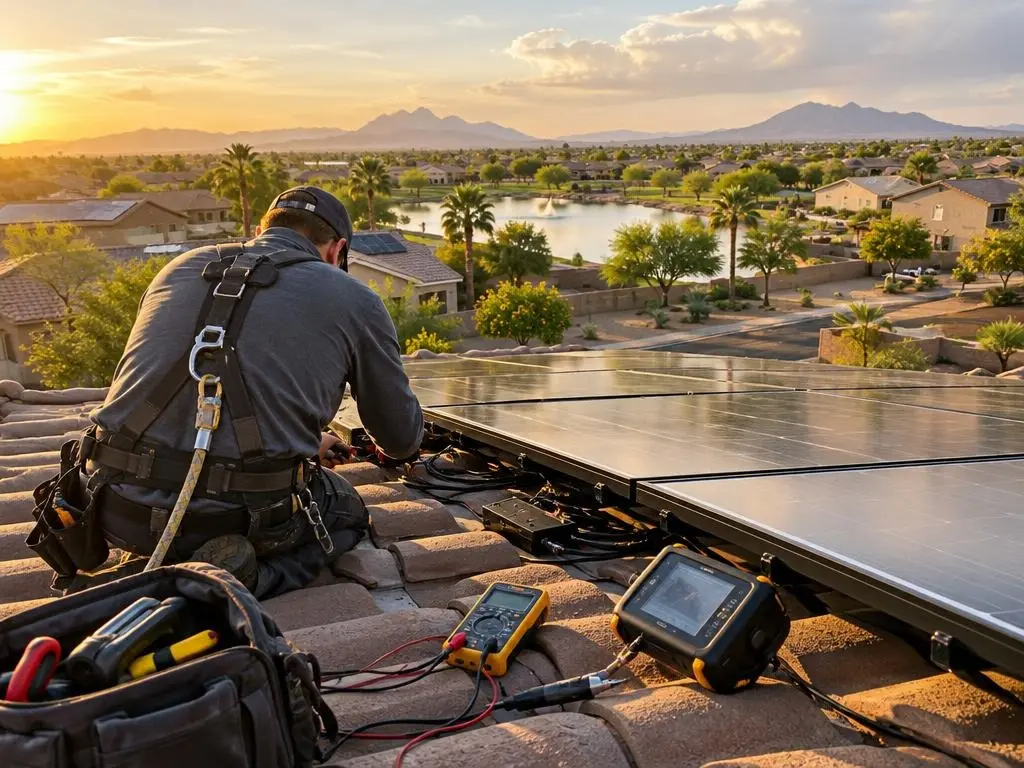
Reading codes and logs, then testing DC input, AC output, breakers and grounding to confirm where the fault really is.
String inverter replacement
Sizing a compatible unit, mounting it where it can shed heat, rewiring the DC and AC connections, and commissioning it.
Microinverter swaps
Pulling the affected panels, replacing failed micros, reconnecting the trunk cable and confirming each unit reports.
Optimizer replacement
Finding the failed optimizer from panel-level data and replacing it under the module.
Monitoring and gateway repair
Reconnecting Wi-Fi or cellular reporting, replacing failed gateways and checking that each panel shows up again.
Warranty claim support
Gathering serial numbers, photos and test results so you have what a manufacturer claim usually asks for.
Typical Inverter Costs
| Job | Typical range |
|---|---|
| Inverter replacement, installed (HomeGuide) | $1,500 to $3,000 |
| Inverter replacement, low to high end (HomeGuide) | $900 to $5,000+ |
| Power optimizers (HomeGuide) | $50 to $150+ per panel |
| Minimum service call for solar repair (HomeGuide) | $100 to $250 |
Ranges vary with inverter type and size, whether the manufacturer covers the part, roof access and any permit or utility paperwork. Your written estimate is the price.
How Inverter Repair Works
1. Collect the details
You send a photo of the inverter label and screen, or the app's error, and tell us when output dropped.
2. Test on site
We check breakers, DC and AC readings, grounding and communication to pin down the failed part.
3. Written estimate
You get the cause, the fix, the parts, any warranty coverage and the total in writing.
4. Paperwork and parts
We confirm permit and utility requirements, then order the inverter, micros or optimizers.
5. Install and commission
The new equipment goes in, gets tested, and we show you production on the display or app before we leave.
Inverter Repair & Replacement Questions
How long do solar inverters last?
HomeGuide puts string inverters at 10 to 15 years and microinverters at 15 to 25 years. Heat shortens life, so placement and shade matter in Gilbert.
Can I replace my inverter with a different brand?
Often, yes, as long as the new unit matches the array's voltage and current and works with any optimizers already installed. A brand change may need updated utility paperwork.
My inverter shuts off on hot afternoons. Is it broken?
Not necessarily. Inverters reduce output or shut down to protect themselves when they get too hot. If it recovers in the evening, placement and airflow may be the real issue.
Is a microinverter system cheaper to fix?
A single failed micro costs less than a whole string inverter, but each one requires getting under a panel. HomeGuide notes microinverter systems cost 15% to 25% more than string systems overall, while their units tend to last longer.
What should I do if the inverter smells hot or is buzzing loudly?
Turn the system off at its AC and DC disconnects if you can do so safely, keep people away from the unit, and call us. Do not open the cover.
Inverter Repair & Replacement Service Areas
- Solar Panel Repair in Gilbert, AZ
- Solar Panel Repair in Agritopia, AZ
- Solar Panel Repair in Val Vista Lakes, AZ
- Solar Panel Repair in Power Ranch, AZ
- Solar Panel Repair in Seville, AZ
- Solar Panel Repair in Higley, AZ
- Solar Panel Repair in Lyons Gate, AZ
- Solar Panel Repair in Spectrum, AZ
- Solar Panel Repair in Cooley Station, AZ
- Solar Panel Repair in Queen Creek, AZ
- Solar Panel Repair in San Tan Valley, AZ
- Solar Panel Repair in Johnson Ranch, AZ
- Solar Panel Repair in San Tan Heights, AZ
- Solar Panel Repair in Florence, AZ
- Solar Panel Repair in Anthem at Merrill Ranch, AZ
- Solar Panel Repair in Coolidge, AZ
- Solar Panel Repair in Gilbert Heritage District, AZ
Get a Inverter Repair & Replacement Estimate
Send us a photo of your inverter screen or error code and we will set up a free diagnostic visit.